
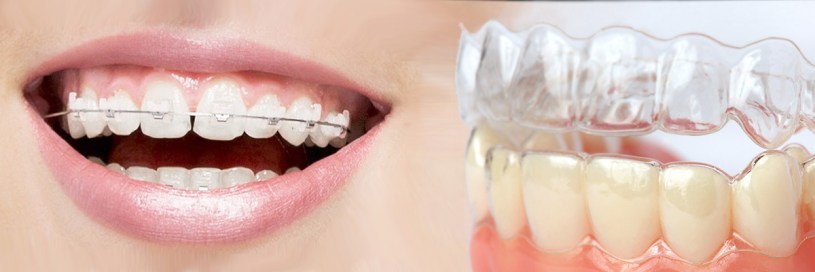
Straightening your teeth is far from a simple task. You need to work through the pros and cons to ensure you arrive at a decision that makes sense for your budget and your pearly whites. To help you out, we’ve decided to compare and contrast two of the most popular options – Invisalign and traditional braces – so you can kickstart your treatment and work towards the smile you’ve always dreamed of.
What are traditional braces?
In some form or another, traditional orthopaedic braces have been used for centuries. That being said, the method of teeth straightening has come on leaps and bounds as technology has evolved and improved. If your teeth are particularly crooked, your dentist might suggest ortho wires, as they provide your teeth with the best possible chance of straightening. This is because traditional braces are attached very firmly to your teeth from the start, and there’s little to no room for manoeuvre. As soon as they’re on, they’re on, and you can’t remove them. The reason that they’ve stood the test of time and been used for centuries is that they work, and there’s no getting away from this fact.
However, traditional braces aren’t without their drawbacks. From an aesthetic standpoint, they’re not the most desirable option. When attached, traditional braces can affect your smile and knock your confidence, which is why many patients are keen to look for alternatives. What’s more, brushing and flossing around a traditional brace takes some getting used to, and when you have ortho wires in your mouth, you need to visit the dentist regularly for checkups.
How is Invisalign different?
Invisalign treatment has emerged as a viable alternative to traditional braces and is the result of some exceptional dental science. The thing that patients love about Invisalign is the look, as these braces are practically invisible. Therefore, they’re an excellent choice if you have some self-esteem issues and don’t want to rock a traditional brace. Invisalign braces also provide you with more control over your treatment, as you can remove them when you brush and floss. Overall, the Invisalign experience is much more comfortable and aesthetically pleasing than opting for traditional braces.
However, Invisalign isn’t perfect, and it’s not suitable for all patients. For example, if you have severe teeth alignment issues and your teeth are particularly crooked, Invisalign probably isn’t the best solution for you. You will also need to wear retainers after the treatment period is finished, as this is a crucial part of keeping your teeth in check. Some patients might even have to use some additional attachments, depending on the desired results of the treatment. Finally, the cost of Invisalign is typically higher than that of traditional braces, which is another thing to consider when you’re deciding on the most appropriate treatment for your teeth.
The bottom line is that both traditional braces and Invisalign braces are popular and effective forms of treatment for anyone looking to straighten their teeth. Therefore, it’s down to you to work through the pros and cons of each treatment before deciding which is best for you. If you’re still on the fence, you can always reach out and contact your dentist for advice. They will talk you through each approach in more detail and answer any questions that you have.
 The Official Health blog